Monday, October 7, 2013

Our Provisional Book List


Behold:  a year of stealing cow creamers, avasting ye mateys, murdering planets and matchmaking.  Everything the heart could desire, all between the covers of a book.

Code of the Woosters, P.G. Wodehouse, Stirling
How I Killed Pluto and Why It Had It Coming by Mike Brown, Williams
My Antonia by Willa Cather, Skinner
Mr. Midshipman Hornblower by C. S. Forester, Spurgin
Love Among the Walnuts: or, How I Saved My Family from Being Poisoned by Jean Ferris, Morris
The Lost Baron by Allen French, Jones
True Grit by Charles Partis, Irlbeck
The Shadow of His Wings by Fr. Gereon Goldmann, OFM, Pearson
Emma by Jane Austen, Hoover
This list will close and become permanent at the end of October.  Our current list will always be available in the RIGHT SIDEBAR in case you need it.  Read all the things! 

Friday, August 30, 2013

Dave Barry on Humor

Our book for this month, Peter and the Starcatchers, is a retelling of Peter Pan by J.M. Barrie and popularized by the iconic Disney movie.  This is our first book by a humorist.  Dave Barry, the author of our book, describes just what humor is:

WHAT IS HUMOR?

Wow, that's the toughest question of all, what's funny. Anything I think is funny. I can't tell you exactly what it is, but I can tell you sort of where I think it comes from. Humor is really closely related to fear and despair. I believe the reason people have a sense of humor is if they didn't, then they would look around, they would realize, with their perfectly rational brains, that we live in an extremely dangerous, scary world, run by all kinds of forces over which we have no control, and we're all gonna get older and sicker and die. That's the way it's gonna work, biologically. It's a scary thing. And if we can't react to that in some way that allows us to release the fear and the anxiety that that realization comes along, we're in deep trouble. So we laugh. Oh, lots of humor about death. Whenever some horrible event happens, instantly your fax starts going, there's jokes, your phones. Jokes about, you know, when the Challenger went down, there were Challenger jokes all over the country. Not 'cause people didn't care, not 'cause people didn't think it was a tragedy, but because people have to react somehow to those unacceptably horrible things that happen all the time. So I think it's that release from anxiety that makes people laugh. I think what good humor writers do is take their readers close to some edge, something that's scary to them, you know--taxes, what the government's doing, nuclear war, the ozone depletion, the fact that your diet is wrong and you might get some disease--all these scary things. And it manages to let you release your anxiety about that by laughing about it. You say, "Well, god, this guy thought about that same thing too, and he manages to still laugh. I can laugh, too, and I'll feel better about that." And I think that's where the heart of humor comes from, that edge. Now, there's other things, like there's just plain zaniness, and wackiness, and just plain weird things are funny. And that's almost indescribable why some people laugh at what they laugh at. But I think most humor comes from, the humorous getting you to an edge that's scary on one side, and there's some humorous release on the other. Just pulling you to the edge and then letting you laugh about it. And you've eased a little tension there. 


Published in the Annenberg Foundation, 2013 

Wednesday, April 24, 2013

The Swiss Family Robinson

The Swiss Family Robinson
by the great American painter
Jean Leohn Huens (1921-1982)
Our next book takes us on an island adventure with Fritz, Ernest, Jack, and Franz, four Swiss boys marooned with their mother and father in the East Indies.  Robinson is not a Swiss name, you say?  It isn't, but the name pays tribute to the equally inconveniently shipwrecked Robinson Crusoe.

This book was written by a Christian pastor Johann David Wyss, who borrows heavily from the educational philosophy of John Jacques Rousseau while at the same time showing us Christian family values, and the virtues of cooperation, stewardship, perseverance, bravery and hope.

This book is probably on your shelf right now, and if not, it is readily available at the Kindle store.  For free!  You can find it here.

Monday, March 11, 2013

A Song For Nagasaki

Here's an excellent overview of our next book by Barara Schoeneberger, who writes the blog Suffering with Joy.
 A Song for Nagasaki: The Story of Takashi Nagai-Scientist, Convert, and Survivor of the Atomic Bomb tells of Dr. Paul Takashi Nagai, an extraordinary man raised in the rural area of Mitoya according to the teachings of Confucius and the Shinto religion which imbued him with filial reverence for ancestors and heroic stoicism.  His mother and father taught him a love of learning by their example, and generous giving by their care for the medical needs of the peasants and townspeople often without payment.
Nagai entered into a spiritual quest while he attended medical school in Nagasaki – a quest that led him from Shintoism to atheism to Catholicism and ultimately to marriage with the daughter of the family which had been at the heart of the underground Church for the centuries of government persecution of Christians.  The biography reveals how Nagai’s medical studies, service as a medic in the Japanese army during the occupation of Manchuria, and his return to become a pioneer of radiology research at Nagasaki University formed his spiritual growth.
Before the bomb exploded over the city that fateful August day, Nagai already had developed leukemia from his radiation exposure, yet he had refused to quit working.  The cancer did not stop him from caring for victims of the inferno although he was wounded himself, and to his surprise and that of his fellow medical practitioners, his disease went into remission for a couple of years because of his exposure to the bomb’s radiation.
Nyoko-do

Nagai lost his beloved wife in the bombing of Nagasaki on August 9th, 1945, but his children who were farther from ground zero survived.  Not long after, he moved into the rubble of the ruined city tostudy the effects of radiation on all life forms, constructing a tiny dwelling on the ground where his house once stood.  He called his little abode “Nyoko-do“, meaning “as yourself hall” taken from Jesus’s words: “Love your neighbor as yourself.”  It was one 6×6 room with a porch built by friends.  He lived there with his children until he died.
Throughout the book Glynn interweaves Japanese history and customs into Nagai’s story, giving the reader a good understanding of the depth of this man.  He describes well how Nagai brought not only physical healing but spiritual healing to the suffering and war-weary people.  Determined not to be bitter or vengeful, he wrote articles and powerful books as a legacy for his children that became best-sellers throughout Japan.  During the last four years of his life, he accomplished this lying on his back because of weakness and abdominal swelling caused by the cancer.
This book above all, is a story of love and forgiveness, of sanctity brought forth from horror. Many people from around the world, including Helen Keller journeyed to meet this unassuming man, who gave most of his earnings for the education and care of war orphans. His example continues to inspire and he is considered a saint by many Japanese people of all faiths.
If you are attracted to conversion stories, this book will not disappoint you.  It is filled with the wonders of God’s grace and inspiration to overcome all bitterness, resentment, and desire for vengeance that plague the human heart.  Nagai truly suffered with joy.

Another excellent resource on Dr. Nagai and the saga of Nagasaki can be found here. This website has many fascinating pictures of Dr. Nagai and the land in which he worked.

Saturday, November 17, 2012

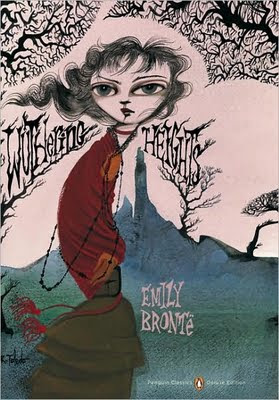
Wuthering Heights


 https://blogger.googleusercontent.com/img/b/R29vZ2xl/AVvXsEiknkvsQYs5p1wBJWjTj1B-K4QrbQq-I0po2GnD4SWQzUKfE2oViF_O91fKz7ceBBeyjkFC9JOKBDrbwBDCXs0shaZdinhxHst2f4w0fri76AmKFDYssTCMx9F-yjiXHOozMlsd70AC5rAT/s400/Emily+Bronte+-+Wuthering+Heights.JPG
From the conflict of the Civil War to a dark manor on the moors of Yorkshire we go, on our last literary adventure of 2012!  Wuthering Heights is the only novel of Emily Bronte, and is considered a classic of English literature.  Emily is the sister of Charlotte Bronte, who wrote the companion classic Jane Eyre.

So famous is this book that it spawned plays, operas, movies and even music videos!  It's so beloved by readers of the English language that Google provides a special map of the locations in Leeds, England, that have been matched to the book.
 
Go here to get a free copy via Kindle app at Amazon, or download it here as an ebook from Project Gutenberg.

Oh, and that music video...  It was done in 1978 by Kate Bush, an English pop star.  Even if the creepy moors of England do not frighten you, if visions of ghosts stalking you through ancient halls do not chill your heart, this will do the trick.  Here is perhaps the craziest music video based on a book ever made.   Brace yourself!

Warning:  Cartwheels ahead.  Proceed with caution.


We'll see you in December for our Christmas party!

Friday, November 9, 2012

Rifles for Watie

We hope you are enjoying this tale of civil war adventure from the prospective of a young Kansas teenager, Jefferson Davis Bussey, who enters the fight with high ideals, and comes to know the real meaning of danger, adventure, self-sacrifice, and love.  

The book was written by Harold Keith (1903-1998), a lifelong resident of Oklahoma, and is based on the real movements, politics, and conditions of the civil war.  Keith won the Newberry Award for the book in 1958.  Most of his books are set in his beloved Oklahoma, and Rifles for Watie is his most famous.  It was based on his Master's Thesis in history.

How close is the book to capturing actual history?  There are two characters in the book who were real men in the civil war. Stand Watie was the last Confederate general to surrender at war's end, and James G. Blunt was a real general who struggled to control Indian Territory.

Stand Watie after the Civil War

Brig. Gen. James Blunt in 1862.
These two men are fascinating to read about.  Clink on the links above to read more.  We'll see you at the next SNACKS meeting!  Also, if someone could tell us all why Blunt has his hand in his shirt we would really appreciate it. What's up with doing that?  ;-)

Tuesday, September 25, 2012

North to Canada!

The Mounties, by James McConnell


A cold front is coming!  Even more so because it comes a little late this year, I know we are all looking forward fall.  Our next month's reading takes us North to Canada with a true-life tale of a Boston girl who marries a Canadian Mountie and experiences life among the natives of a brutal, yet beautiful land.  We'll discuss the book at our next meeting on October 19th at 7:30 p.m.  Who knows, it might be even cold enough to have a fire!  Wouldn't that be nice...