As we finish Willa Cather's My Antonia, here are a few quotes from her to put the story in perspective:
"Bigness" is the subject of my story. The West always paralyzes me a little. When I am away from it I remember only the tang on the tongue. But when I come back [I] always feel a little of the fright I felt when I was a child. I always feel afraid of losing something…. I never can entirely let myself go with the current; I always fight it just a little…. It is partly the feeling that there are so many miles—wait till you travel ’em!—between you and anything, and partly the fear that the everlasting wind may make you contented and put you to sleep. I used always to be sure that I’d never get out, that I would die in a cornfield. Now I know I will get out again, but I still get attacks of fright.
Nearly all my books are made out of old experiences that have had time to season. Memory keeps what is essential and lets the rest go. I am always afraid of writing too much—of making stories that are like rooms full of things and people, with not enough air in them.
As for Antonia, she is really just a figure upon which other things hang. She is the embodiment of all my feeling about those early emigrants in the prairie country. The first thing I heard of when I got to Nebraska at the age of eight was old Mr. Sadalaak’s suicide, which had happened some years before. It made a great impression on me. People never stopped telling the details. I suppose from that time I was destined to write Antonia if I ever wrote anything at all.
~ Willa Cather
Monday, January 13, 2014
Sunday, November 24, 2013
The Man Who Murdered A Planet
A Letter from Author Mike Brown
My daughter Lilah, now five years old, is mad at me for killing Pluto. When I began a project 13 years ago to chart the slowly-moving objects of the distant outer solar system, my goal was never to pull Pluto off of its cherished planetary pedestal. I wanted to be a planet discoverer, like William Herschel or Clyde Tombaugh before me. I had a strong feeling that somewhere out there something bigger than Pluto was lurking, and I knew that whoever found it would get to claim the mantle as the only living planet discoverer.
I was right. Something bigger than Pluto was out there (or at least something more massive than Pluto; sizes are a little harder to pin down precisely) and one January morning in 2005, my small team of astronomers and I found it. We announced the discovery of the 10th planet to an unsuspecting world late on the afternoon of Lilah’s 22nd day of life. A little after her first birthday, though, the doors to the planetary club were locked and Pluto and my own discovery were kicked out on the curb. The solar system was down to only eight planets.
It was hard not to mourn the loss of my now ex-planet, except for the fact that I had to admit that kicking it out was the most scientifically sensible thing to happen to planetary classification since asteroids were also kicked out almost 200 years ago. The solar system is a beautiful and profound place, and it is made richer with the realization that the eight planets are the foundation throughout which countless smaller bodies continuously swirl.
When Pluto was first demoted, people said to me, “What about the children? How could you do this to them?” But, in fact, children live lives that are always changing. It’s the adults who have had the hardest time reconciling the new understanding of the solar system with what they remember from when they themselves were children. So, it made sense that I used to joke about what would happen the moment when Lilah first learned about the solar system. She would come home, and I would say, “Tell me all about the eight planets,” and when I would try to tell her about the olden times when we used to think there were nine—or even ten!—planets, she would slowly shake her head and exclaim, “Daddy, adults are so stupid.”
But I was wrong.
Lilah knows all about Pluto. She has a stuffed dog, a planet lunch box, a solar system place mat at the dinner table. She feels as warmly towards the ice ball as someone ten times her age, and, like many of those older people, she is mad at the person who killed it. Lilah, though, has a solution. She recently told me, “Daddy, I know that you had to kill Pluto, but will you promise me one thing?”
“Of course,” I said.
“You have to go find another planet, and when you do, you have to name it Pluto for me, OK?”
So my search of the skies continues.
I was right. Something bigger than Pluto was out there (or at least something more massive than Pluto; sizes are a little harder to pin down precisely) and one January morning in 2005, my small team of astronomers and I found it. We announced the discovery of the 10th planet to an unsuspecting world late on the afternoon of Lilah’s 22nd day of life. A little after her first birthday, though, the doors to the planetary club were locked and Pluto and my own discovery were kicked out on the curb. The solar system was down to only eight planets.
It was hard not to mourn the loss of my now ex-planet, except for the fact that I had to admit that kicking it out was the most scientifically sensible thing to happen to planetary classification since asteroids were also kicked out almost 200 years ago. The solar system is a beautiful and profound place, and it is made richer with the realization that the eight planets are the foundation throughout which countless smaller bodies continuously swirl.
When Pluto was first demoted, people said to me, “What about the children? How could you do this to them?” But, in fact, children live lives that are always changing. It’s the adults who have had the hardest time reconciling the new understanding of the solar system with what they remember from when they themselves were children. So, it made sense that I used to joke about what would happen the moment when Lilah first learned about the solar system. She would come home, and I would say, “Tell me all about the eight planets,” and when I would try to tell her about the olden times when we used to think there were nine—or even ten!—planets, she would slowly shake her head and exclaim, “Daddy, adults are so stupid.”
But I was wrong.
Lilah knows all about Pluto. She has a stuffed dog, a planet lunch box, a solar system place mat at the dinner table. She feels as warmly towards the ice ball as someone ten times her age, and, like many of those older people, she is mad at the person who killed it. Lilah, though, has a solution. She recently told me, “Daddy, I know that you had to kill Pluto, but will you promise me one thing?”
“Of course,” I said.
“You have to go find another planet, and when you do, you have to name it Pluto for me, OK?”
So my search of the skies continues.
Monday, October 7, 2013
Our Provisional Book List
Behold: a year of stealing cow creamers, avasting ye mateys, murdering planets and matchmaking. Everything the heart could desire, all between the covers of a book.
Code of the Woosters,
P.G. Wodehouse,
Stirling
How I Killed Pluto and Why It
Had It Coming by Mike Brown,
Williams
My Antonia by Willa
Cather, Skinner
Mr. Midshipman
Hornblower by C. S. Forester,
Spurgin
Love Among the Walnuts:
or, How I Saved My Family from Being Poisoned by
Jean Ferris, Morris
The Lost Baron by Allen
French, Jones
True Grit by Charles
Partis, Irlbeck
The Shadow of His Wings
by Fr. Gereon Goldmann, OFM,
Pearson
Emma by Jane Austen,
Hoover
This list will close and become permanent at the end of October. Our current list will always be available in the RIGHT SIDEBAR in case you need it. Read all the things!
Friday, August 30, 2013
Dave Barry on Humor
Our book for this month, Peter and the Starcatchers, is a retelling of Peter Pan by J.M. Barrie and popularized by the iconic Disney movie. This is our first book by a humorist. Dave Barry, the author of our book, describes just what humor is:
WHAT IS HUMOR?
Wow, that's the toughest question of all, what's funny. Anything I think is funny. I can't tell you exactly what it is, but I can tell you sort of where I think it comes from. Humor is really closely related to fear and despair. I believe the reason people have a sense of humor is if they didn't, then they would look around, they would realize, with their perfectly rational brains, that we live in an extremely dangerous, scary world, run by all kinds of forces over which we have no control, and we're all gonna get older and sicker and die. That's the way it's gonna work, biologically. It's a scary thing. And if we can't react to that in some way that allows us to release the fear and the anxiety that that realization comes along, we're in deep trouble. So we laugh. Oh, lots of humor about death. Whenever some horrible event happens, instantly your fax starts going, there's jokes, your phones. Jokes about, you know, when the Challenger went down, there were Challenger jokes all over the country. Not 'cause people didn't care, not 'cause people didn't think it was a tragedy, but because people have to react somehow to those unacceptably horrible things that happen all the time. So I think it's that release from anxiety that makes people laugh. I think what good humor writers do is take their readers close to some edge, something that's scary to them, you know--taxes, what the government's doing, nuclear war, the ozone depletion, the fact that your diet is wrong and you might get some disease--all these scary things. And it manages to let you release your anxiety about that by laughing about it. You say, "Well, god, this guy thought about that same thing too, and he manages to still laugh. I can laugh, too, and I'll feel better about that." And I think that's where the heart of humor comes from, that edge. Now, there's other things, like there's just plain zaniness, and wackiness, and just plain weird things are funny. And that's almost indescribable why some people laugh at what they laugh at. But I think most humor comes from, the humorous getting you to an edge that's scary on one side, and there's some humorous release on the other. Just pulling you to the edge and then letting you laugh about it. And you've eased a little tension there.
Published in the Annenberg Foundation, 2013
WHAT IS HUMOR?
Wow, that's the toughest question of all, what's funny. Anything I think is funny. I can't tell you exactly what it is, but I can tell you sort of where I think it comes from. Humor is really closely related to fear and despair. I believe the reason people have a sense of humor is if they didn't, then they would look around, they would realize, with their perfectly rational brains, that we live in an extremely dangerous, scary world, run by all kinds of forces over which we have no control, and we're all gonna get older and sicker and die. That's the way it's gonna work, biologically. It's a scary thing. And if we can't react to that in some way that allows us to release the fear and the anxiety that that realization comes along, we're in deep trouble. So we laugh. Oh, lots of humor about death. Whenever some horrible event happens, instantly your fax starts going, there's jokes, your phones. Jokes about, you know, when the Challenger went down, there were Challenger jokes all over the country. Not 'cause people didn't care, not 'cause people didn't think it was a tragedy, but because people have to react somehow to those unacceptably horrible things that happen all the time. So I think it's that release from anxiety that makes people laugh. I think what good humor writers do is take their readers close to some edge, something that's scary to them, you know--taxes, what the government's doing, nuclear war, the ozone depletion, the fact that your diet is wrong and you might get some disease--all these scary things. And it manages to let you release your anxiety about that by laughing about it. You say, "Well, god, this guy thought about that same thing too, and he manages to still laugh. I can laugh, too, and I'll feel better about that." And I think that's where the heart of humor comes from, that edge. Now, there's other things, like there's just plain zaniness, and wackiness, and just plain weird things are funny. And that's almost indescribable why some people laugh at what they laugh at. But I think most humor comes from, the humorous getting you to an edge that's scary on one side, and there's some humorous release on the other. Just pulling you to the edge and then letting you laugh about it. And you've eased a little tension there.
Published in the Annenberg Foundation, 2013
Wednesday, April 24, 2013
The Swiss Family Robinson
![]() |
| The Swiss Family Robinson by the great American painter Jean Leohn Huens (1921-1982) |
This book was written by a Christian pastor Johann David Wyss, who borrows heavily from the educational philosophy of John Jacques Rousseau while at the same time showing us Christian family values, and the virtues of cooperation, stewardship, perseverance, bravery and hope.
This book is probably on your shelf right now, and if not, it is readily available at the Kindle store. For free! You can find it here.
Monday, March 11, 2013
A Song For Nagasaki
Here's an excellent overview of our next book by Barara Schoeneberger, who writes the blog Suffering with Joy.
A Song for Nagasaki: The Story of Takashi Nagai-Scientist, Convert, and Survivor of the Atomic Bomb
tells of Dr. Paul Takashi Nagai, an extraordinary man raised in the rural area of Mitoya according to the teachings of Confucius and the Shinto religion which imbued him with filial reverence for ancestors and heroic stoicism. His mother and father taught him a love of learning by their example, and generous giving by their care for the medical needs of the peasants and townspeople often without payment.
Before the bomb exploded over the city that fateful August day, Nagai already had developed leukemia from his radiation exposure, yet he had refused to quit working. The cancer did not stop him from caring for victims of the inferno although he was wounded himself, and to his surprise and that of his fellow medical practitioners, his disease went into remission for a couple of years because of his exposure to the bomb’s radiation.
Nagai lost his beloved wife in the bombing of Nagasaki on August 9th, 1945, but his children who were farther from ground zero survived. Not long after, he moved into the rubble of the ruined city tostudy the effects of radiation on all life forms, constructing a tiny dwelling on the ground where his house once stood. He called his little abode “Nyoko-do“, meaning “as yourself hall” taken from Jesus’s words: “Love your neighbor as yourself.” It was one 6×6 room with a porch built by friends. He lived there with his children until he died.
Throughout the book Glynn interweaves Japanese history and customs into Nagai’s story, giving the reader a good understanding of the depth of this man. He describes well how Nagai brought not only physical healing but spiritual healing to the suffering and war-weary people. Determined not to be bitter or vengeful, he wrote articles and powerful books as a legacy for his children that became best-sellers throughout Japan. During the last four years of his life, he accomplished this lying on his back because of weakness and abdominal swelling caused by the cancer.
This book above all, is a story of love and forgiveness, of sanctity brought forth from horror. Many people from around the world, including Helen Keller journeyed to meet this unassuming man, who gave most of his earnings for the education and care of war orphans. His example continues to inspire and he is considered a saint by many Japanese people of all faiths.
If you are attracted to conversion stories, this book will not disappoint you. It is filled with the wonders of God’s grace and inspiration to overcome all bitterness, resentment, and desire for vengeance that plague the human heart. Nagai truly suffered with joy.
Another excellent resource on Dr. Nagai and the saga of Nagasaki can be found here. This website has many fascinating pictures of Dr. Nagai and the land in which he worked.
Saturday, November 17, 2012
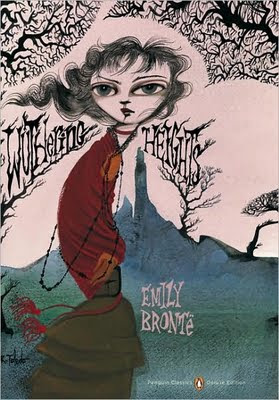
Wuthering Heights
From the conflict of the Civil War to a dark manor on the moors of Yorkshire we go, on our last literary adventure of 2012! Wuthering Heights is the only novel of Emily Bronte, and is considered a classic of English literature. Emily is the sister of Charlotte Bronte, who wrote the companion classic Jane Eyre.
So famous is this book that it spawned plays, operas, movies and even music videos! It's so beloved by readers of the English language that Google provides a special map of the locations in Leeds, England, that have been matched to the book.
Go here to get a free copy via Kindle app at Amazon, or download it here as an ebook from Project Gutenberg.
Oh, and that music video... It was done in 1978 by Kate Bush, an English pop star. Even if the creepy moors of England do not frighten you, if visions of ghosts stalking you through ancient halls do not chill your heart, this will do the trick. Here is perhaps the craziest music video based on a book ever made. Brace yourself!
Warning: Cartwheels ahead. Proceed with caution.
We'll see you in December for our Christmas party!
Subscribe to:
Posts (Atom)